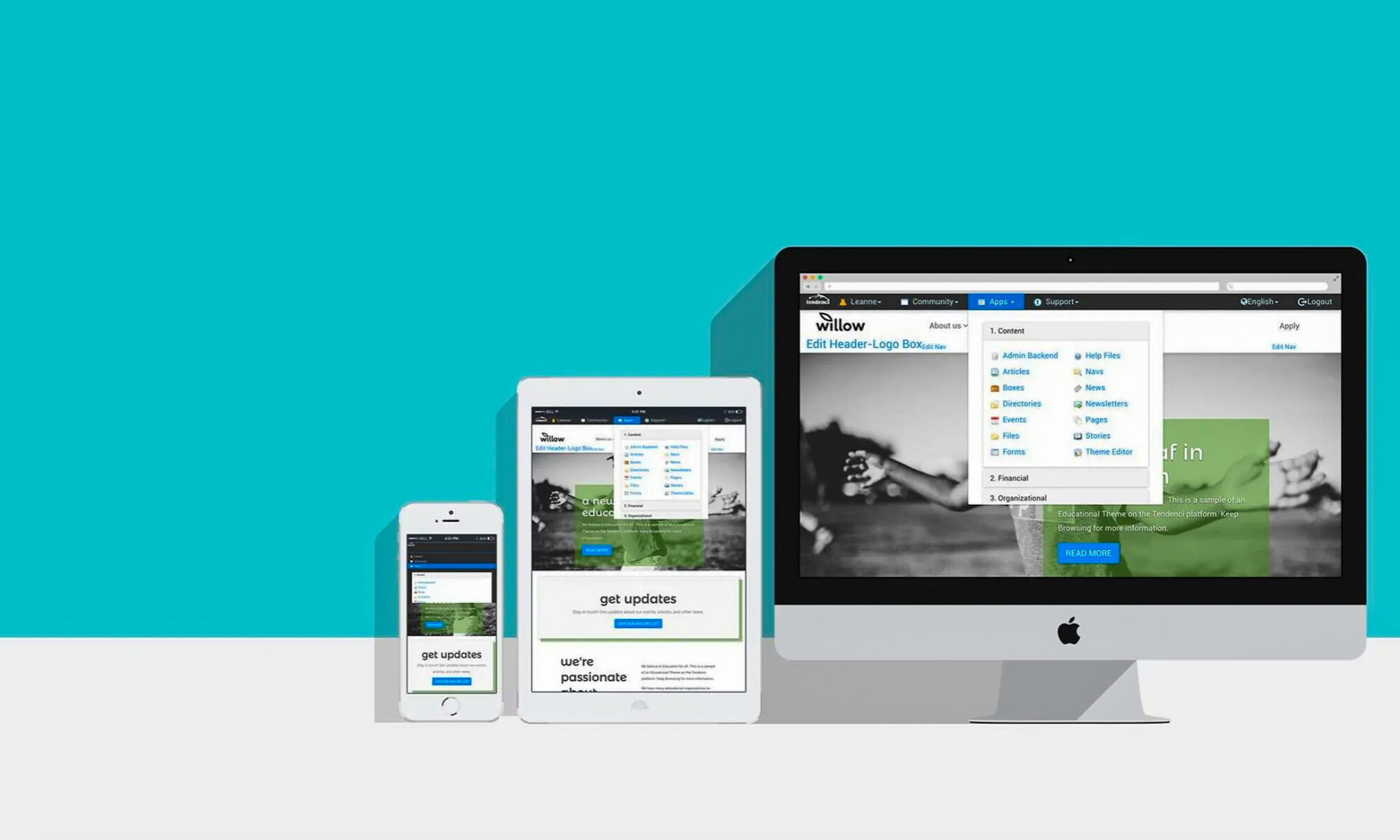
Tendenci In-Depth Feature Guide – Help Files Module

help files angled with borderThe Help Files Module is included with all Tendenci websites, and is a Tendenci module that I use daily for documenting training guides, tips & tricks, and standards/best practices for Tendenci client websites. I was surprised to discover that many of you aren’t using or fully utilizing this module on your Tendenci websites. So I thought I’d provide an in-depth look into the Tendenci Help Files Module, and show you how other associations are using this built-in ‘Wiki‘ tool to engage with their community and succeed in their online fundraising goals.

Let’s dive in and get to know Tendenci’s Help Files Module!

Why? –> Wiki’s Increase Participation!

help files admin top bar blue menu drop down

Wiki, Help Files, Resource Library, Knowledge Base… these are just a few names that people commonly use to refer to a web application that allows users to add and edit content through their web browser with the purpose of collaboratively managing knowledge online.

The best reason your Association should be using some kind of Wiki tool is because it provides more opportunities for your members and donors to interact with you and feel like they’re really part of moving your mission forward.

I recommend you check out a terrific presentation, by Julie Spriggs, that gives you tons of insight into how Nonprofits can use a Wiki for different collaborative projects including:

  • Maintaining a central repository of knowledge that your Association has amassed
  • Managing large projects that involve lots of moving pieces and diverse people/roles
  • Collaborative document creation and management
  • Planning large events like your annual fundraising Gala or membership drive
  • Organizing your knowledge base by department and committee groups
  • Connect with and involve  your constituents in your association’s activities
  • And more…!

Wikis For Nonprofits from Julie Spriggs

Wiki’s provide a platform for everyone involved with your organization to come together and communicate, collaborate, and share their knowledge and ideas.

Wiki or Help Files…?

Tendenci websites all come with the module called “Help Files”, but we know you probably want to pick your own name to suit your organization. You can easily change the label of the module that displays on your website’s public pages inside your Help Files site settings.

help files settings and place to change name

What’s Included in the Help Files Module?

Tendenci’s Help Files Module gives your organization a built-in wiki tool as part of your association management platform, and we’ve built Help Files flexibly so you can use it for different purposes depending on your unique nonprofit’s needs.

Here’s my top 3 Neatest Features of the Help Files Module

You can try out all the features on our Live Demo Site. Just head here: https://www.tendenci.com/try-now to get Super User access!

1) Use the Selective Permission Controls for tiered access to different Help Files, enabling everyone in your community to collaborate to your knowledge base securely and privately as needed by your association’s procedures and polices. Check out the screenshot below that demonstrates how easy it is to selectively share access for viewing and making changes to individual help files.

help files permissions advanced options

Tendenci organizes your User permissions by Users, Memberships, and User Group types. You can create custom User Groups and add individual users and then provide them with secure access to only the files they should have access to.

2) Tendenci makes it easy to Automatically Filter and Promote your most important Help Files with the Help File Sidebar.

is featured is faq help files add front end checkbox

The Help File sidebar provides quick access for your site users to Request a Help File as well as a menu for Help Files that have been marked as Featured, FAQ (stands for Frequently Answered Questions), and Most Viewed. When new help files are added to your website and include one of these three tags, they’ll automatically be displayed on the sidebar.

3) Use Topics to Organize and Segment Your website’s Help Files Module. Only Super Users can add new topics and at least one topic must be selected when adding a new Help File. This helps you keep your online community resource files organized and easy to find.

add and change topics for help files

Whenever a member adds a new help file and selects the topic, then this help file will only show under that topic. Topics that don’t have help files won’t be displayed on the main menu, so you can create your Topics using a predetermined structure before you’ve had any files added. Another nifty feature, to me, is that Tendenci recognizes who has access to help files within certain topics and your members won’t ever see the Topics label for your internal staff files when they login. Users only see Topics and Files that they have permission to view, and nothing more.

SEO Bonus!

By including your association’s wiki within your Tendenci site by using the Help Files Module, each new page created counts as new content to search engine crawlers! If you foster an online wiki for knowledge sharing and encourage your members to participate and contribute, they’ll help you with your online marketing efforts naturally.

Ten Benefits for You and Your Members!

private staff only internal files
Create a Private Resource Repository using Help Files

Here’s 10 great ways you can take advantage of the cool features included with the Help Files module and boost your association’s online community participation:

  1. Enable members and registered site users to collaborate on your wiki – this saves your staff time and makes your members feel included!
  2. Create an Internal Repository for your staff and/or Board – use Tendenci’s selective permissions to control who has access to each individual help file. Create on boarding guides for new staff members that only your association’s key personnel can see, without effecting public help files.
  3. Setup Help Files and topics based on user groups – group members can view and collaborate on knowledge specific to the group purpose, and as group members change, the history of the group’s knowledge is available on your site.
  4. Post important local community resources – include things like your organization’s emergency preparedness policies, how to take action in the case of a crisis, and information about other local organizations and groups that support your mission.
  5.  Create a place for event participants to add session notes and takeaways – Create a new topic or Group for event attendees and let them add and collaborate on help file notes from the different sessions. After the conference, embed the presenters’ slides and any other rich media (ie videos and photos) inside the help file.
  6. Offer training guides for developing new professional skills –  Use the selective permissions controls to create members-only repositories and share industry reports and valuable training guides with your paying members and contributors- or make them free for anyone who stops by your website, it’s your choice!
  7. Build a globally diverse resource library – Your website is accessible day or night from virtually anywhere in the world, and with modern day web browser translation options, your International supporters can share their global perspectives on your association’s cause related issues.
  8. Provide getting started guides for your community – new members path, how to volunteer vote for board etc
  9. Think collaboration-both inside your org as well as outside -invite other associations and chapters to contribute on the wiki.
  10. Document external resources and company account information – for tools, like software and vendor accounts, where your staff can quickly access to download, read, learn without the hassle of a search or wondering if the links will be active in a year
project management help files example
Get Members and Volunteers Working Together on Special Projects and Events!

Now you’re equipped with a deeper understanding of ways that you can use Tendenci’s Help Files like any other wiki to reach out to your community, manage volunteers, create a repository for resources. Best of all, the Help Files module comes with Tendenci ready to start adding content to “out of the box”. I’ve added a few help files to the Tendenci Demo site, and you can see that it only takes a few minutes to quickly get your Topics and a framework for adding new content to your site’s Help Files module.

10 Minutes to Set-Up

In about 10 minutes, you can set-up access for your staff and members and give them the tools they need to help you keep up with your online and offline resources. And don’t worry if you aren’t sure how to get started because I’ll help you out!

You can leave a comment below, and include your Tendenci website URL, if you’d like to schedule 10 minutes with me through an online web conference where I’ll walk you through the set-up process. Before our 10 minute training, I’ll send you a quick template that will help you identify the main Topics you’ll want to start building your knowledge base. You can also submit a request using our “Request a Help File” – just be sure to leave your contact information as shown in this screenshot:

tendenci help files request

Open Source Technology from the NonProfit Point of View – Houston NetSquared’s April Topic

On Tuesday, I had the honor of co-hosting this month’s Houston NetSquared meetup featuring Jeff D. Frey, the Web services manager in Rice University’s IT Department.  Jeff’s role at Rice is to help all the different departments within the university as well as nonprofits in the Houston community identify the best software tools and then install and integrate them.

Jeff spoke to the members of the  Houston NetSquared on the good and bad things about open source technologies.  He approached the topic  from the perspective of nonprofit organizations and their communities based on his experience working with all kinds of software and hardware solutions at Rice.  Here’s a wrap-up of Jeff Frey’s presentation “Open Source … and Six Blind Men.”

Six Blind Men?

Jeff began his presentation with one of my favorite parable’s 6 Blind Men and an ElephantEach man had a different impression of the Elephant after feeling just one part.

Jeff Frey uses this parable to explain that “Much like the elephant trainer, my role is to basically show you around the elephant of open source”.

The Open Source Elephant

Just like the six blind men in the parable, Jeff described that there are six different perspectives in nonprofit organizations, and each of them typically only sees one piece of the total project being planned.

Jeff describes the people that typically see each perspective’s piece of the open source elephant and talks about what he recommends nonprofit organizations should be aware of with open source tools to make sure each group’s perspective fits into the total picture and everyone in  your nonprofit organization likes to use the new solution.

The 6 Perspectives of Open Source:

1)      Community

—  This is the group of people that follow the open source software or product and is usually a tight knit group.

According to Jeff, nonprofit organizations should take a look at how strong an open source’s community is.  A strong community means the product will probably be better supported and have more “one off” or edge-case customizations that your nonprofit can benefit from for free or lower cost than if you had to pay for the custom development yourself.

2)      Customers

–-  The folks that a nonprofit serves including your members, donors, and visitors to your website.

The great thing about open source from your customers’ perspective is that it can look really high end, has improved stability, and has fewer compatibility issues with web browsers.  Open source makes it easier for you to look like you know what you are doing to your customers even if you can barely use a WYSIWYG editor.

3)      Management

–-  Your Board members, Executive Director, and the decision makers at your organization.

From the perspective of your Board and those approving the budget for the project, open source is a very appealing option.  There are little to no software costs, no programmers, and the potential for no hardware costs.  As Jeff put it “You can basically run your whole nonprofit on open source tools with virtually no software costs.”

4)      Employees

-–  The people most affected by the software package you select, the ones using it daily and sometimes this includes your volunteers.

Your employees and volunteers using the software everyday will want to know that the software will work and will be easy to use.  Different open source software options have varying levels of features and ease of use.  You’ll want to look at how much training your employees will need before they use the new product and if it has the features your organization needs.  Jeff suggests starting with something little that your staff does daily with the current solution and see how the proposed software performs with that task.  Then keep adding new daily tasks, one at a time, and test them before deciding on a particular software product.

5)      Developers

–-  The application developers that constantly support and add new features and functionality to the open source software.

“It wouldn’t be an open source product without having developers”, Jeff rightly states.  When looking at open source software, you should find out what are the code base standards and ask if there is a good, available API.  Find out what the language on which the software is built because some are more difficult to use, which increases programming hours for custom projects.

6)      Support Staff

—  These are your designated “power users” and can be internal or external to your organization.  Often this will be an IT consulting firm or Web design agency who customizes and updates your software.

When looking at open source solutions from the perspective of your power users, you will want to find an open source product that has a strong network of partners and support professionals.  Ask if the software has a regular schedule to roll out new versions and patches and find out about the hardware, network, back-up and maintenance processes and costs when comparing software.

Tell Us which of the six perspectives you think you fall under in our comments below!

I probably fall under the power user perspective in most cases, and in particular when talking about Tendenci.  I spend most of my days inside a Tendenci website updating content, adding events, creating training documentation, etc. and I honestly love it.

Has the Elephant Left the Building?

With all the excitement we’ve felt here with the open source release of Tendenci last week – we also recognize the hesitation and concerns from our current clients and their community.  We want to keep the conversation going to address your questions and I thought I’d add my personal takeaways from Jeff’s Netsquared presentation and invite you to tell me what else you’d like to talk about.

Jeff Frey surprised us with a slide on Tendenci in his presentation and Jeff shared his feedback on our newly open source CMS to the Houston NetSquared members.  Here’s what he thinks about Tendenci:

  • Tendenci has a very new/young community of developers and followers and his advice to me was to “get in the mindset of moving in the direction of building your developer community”.
  • Tendenci is written in the Python programming language, which is the language that “all the cool kids are coding in now,” including what Rice undergrad programmers are learning.
  • Unlike a lot of open source software, Tendenci has more than just a forum to support its clients and community; it has real people to call, email, and come Hang Out with.

One important quote I heard Jeff say at NetSquared was “Open source doesn’t mean free as in no cost, it means free as in liberated.” And throughout Jeff’s presentation, he reiterated that while the software code is freely available, and anyone can download a copy and start using it for free… there are different costs associated with open source software that can include things like hosting, IT support staff, development to customize the platform for your organization, and hardware costs.

To provide you with an example: you can create a free twitter account to use but you then may have to pay for…

  • the computer or laptop that you access twitter from,
  • the internet connection to connect to twitter,  Then,
  • the designer to customize your twitter landing page,
  • the staff member or to manage your twitter communications,
  • the web marketing agency to train you and your staff how to use twitter…

As you can see, each of these extras come with an extra cost.  It is no different with other open source software, including Tendenci.  Open source software does greatly reduce the total cost of the project so that more nonprofit organizations can afford to have better tools to operate online and offline.

I want to leave you with a comment from an audience member Tuesday night at NetSquared:

” The thing about Open Source that I love is there is a huge community helping find the bugs before I have to find it, and fixes it, and I don’t have to pay for it or deal with it.”

Historical Content: Schipul Releases Open Source Tendenci CMS for NonProfit Websites

We love Open Source and our clients do too!  We often hear from clients that you only will use open source software to build your websites and the advantages of having an open source community of developers and designers are undeniable.

That’s why everyone here at Schipul is super excited to announce we can now offer you a new open source option in addition to Drupal and WordPress open source website development and design with our open source release of our Tendenci CMS for NonProfit Websites.

Tendenci is the First Open Source CMS Made Just for Non-Profits!

The open source release of Tendenci is now available as part at the  Nonprofit Technology Conference  in San Francisco going on this week, April 3-5.

Read More Details about the Open Source Announcement!

Here’s photos of the nonprofit tech conference that our team of Schipulites attending NTEN’s NonProfit Technology Conference are shooting and sharing daily.

What Does This Mean for Current Schipul Clients?

Here are some links with information for our current clients to explain what this means for you and your website, and what open source software is:

Open Source Tendenci FAQ for Current Tendenci Clients | From the Tendenci Blog

Tendenci Open Source AMS – about Open Source

Open Source Hosting Prices and FAQ with the Tendenci Community

Download, Deploy and Host Your Own Open Source NonProfit Website with Tendenci CMS

We have set-up a public repository on Github for Tendenci where you can access the software for those looking to host their own Tendenci website here:  https://github.com/tendenci/tendenci/.  The Tendenci CMS is written in the Python programming language within a Django framework.

Visit tendenci.com for information and help with our open source CMS.

If you have additional questions, comments, concerns, etc. please don’t hesitate to contact us, or post them in the comments below.

Get All the Open Source Tendenci News