Tendenci AMS API Integration

Python Rules

OCT 2023 UPDATE: For information on accessing Tendenci data via API please see our GitHub discussion at https://github.com/tendenci/tendenci/issues/1023

For more on The Open Source AMS integration via API visit our AMS API Helpfile

Tendencithe Open Source AMS is unique in that it is fully open source. However at times people would prefer to use an API to pull specific information. For that Django has several API integrations for your Association Management System such as:

django-tasty-pie is a REST based API to your AMS
https://github.com/django-tastypie/django-tastypie
The Django Rest Framework is also something the Tendenci community has been discussing switching to it as well.
http://www.django-rest-framework.org/

API’s aren’t mutually exclusive after all, right? You have options.

There are legitimate reasons to use an API. Examples include integration between a legacy mainframe system, ecommerce, or a development team that has chosen a different platform such as .NET or PHP.

Tendenci doesn’t meet all of the functional requirements for everyone by design. Instead we work with great technology like machine learningThe open AMS community isn’t focused on reinventing the wheel. It just doesn’t make economic sense for a non-profit, or even a for profit company, to reinvent Amazon.com or Ebay.com. This is particularly true if you are causes-based association or non-profit given the expense.

Does Tendenci AMS work with other providers? Absolutely. Any provider with an API or that supports SSO or RSS or has their own technology like google tag manager.

Non profits don’t have money to waste. Therefore we aligned our product to major industry supported technology.

Our technology stack as of 2018 is:

  1. Tendenci
  2. Django Web Framework
  3. Javascript and jquery
  4. Bootstrap CS
  5. Python Programming Language
  6. Postgres Database with GIS
  7. Docker Containers
  8. Ubuntu

For more on The Open Source AMS integration via API visit our AMS API Helpfile or read up on everything Tendenci Works With. Or if you aren’t into open source, there are definitely alternatives to Tendenci.

If you do pick an alternative, we suggest you consider Security FIRST and go from there.

NonProfits and Associations Love Tendenci

Tendenci Association Websites

Written specifically for the NPO/Association market, Tendenci has continued to grow and adapt to meet the specific needs of these groups. From building on an open source framework that allows complete freedom  – to mobile responsive software design – to online forums and newsletter features that keep the community involved, Tendenci continues to invest in the NPO sector. And the NPO’s have responded!

We are pleased to continue our relationship with the following organizations that have recently released upgraded websites and extend a warm welcome to those that are new to the Tendenci community.


  1. University and College Designers Association Selects Tendenci for New Membership Website


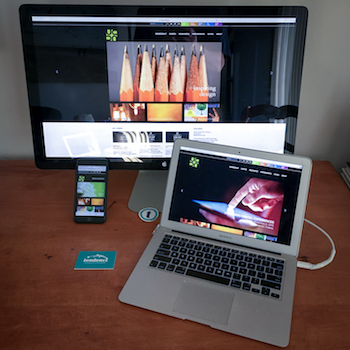
    UCDA Tendenci Website


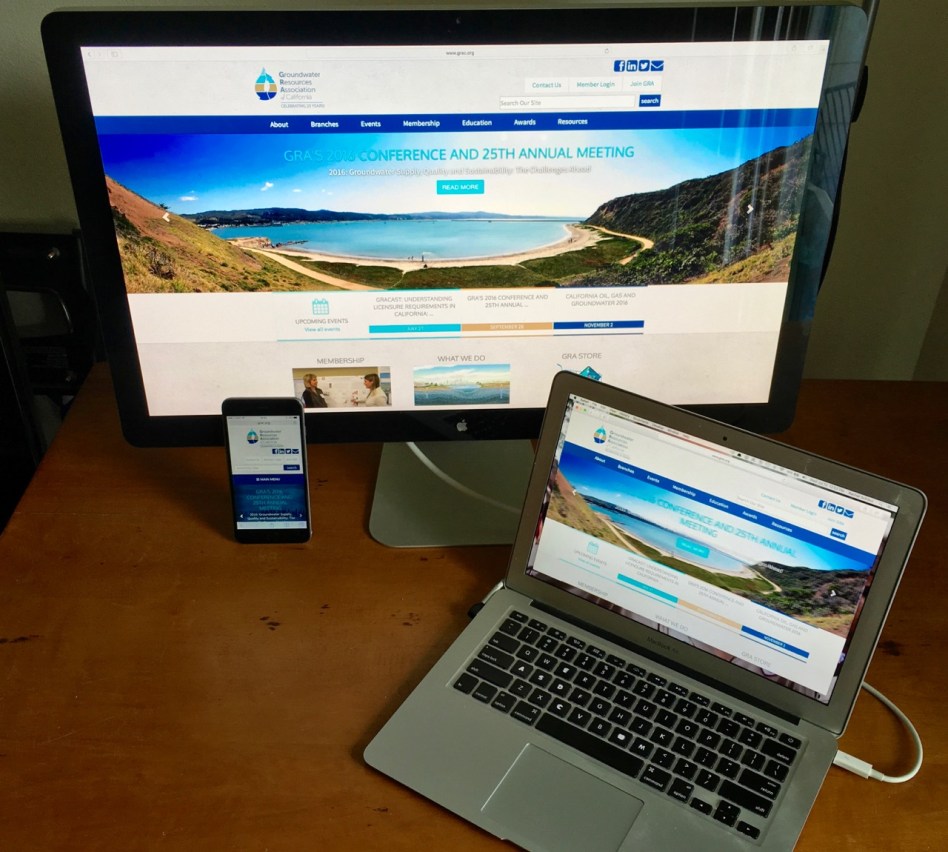
  2. Groundwater Resources Association of California Launches Tendenci Membership Management Website


    GRAC Tendenci Website


  3. The Children’s Assessment Center of Houston Releases New Mobile Tendenci Website


    CAC Houston Tendenci Website


  4. American Association of Singapore Launches Upgraded Mobile Tendenci Website For Their Membership


    AA Singapore Tendenci Website


  5. American Citizens Abroad, Inc. Launches Tendenci Membership Management Website


    American Citizens Abroad Tendenci Website


  6. Rice University Energy and Environment Initiative (EEi) Presents Transformative Solutions with New Website


    Rice University EEI Tendenci Website


  7. International Association of Directional Drilling Chooses Tendenci for Fast Launch of Member Website


    IADD Tendenci Website

Tendenci Exports – Plus Easy Ways to Make Static Copies of Your Site

Today’s Tendenci community knowledge share. Here are three very easy free or low cost methods of making a static copy a web site. Use with caution, just know you have the power.

On Windows you can use HTTrack https://www.httrack.com/

HTTrack_Website_Copier_-_Free_Software_Offline_Browser__GNU_GPL_
Download a static version of a web site to your PC

On a Mac computer you can use sitesucker ($5) http://ricks-apps.com/osx/sitesucker/index.html

SiteSucker to download a static site to your Mac Computer

On the go? You can also use sitesucker from the app store to download to your iphone or ipad for $2 http://ricks-apps.com/ios/sitesucker/index.html

Use IOS to download your site for $2

Of course for structured data in Tendenci, there are TONS of ways to export including exporting a copy of your entire database. There are help files on common exports like How to export your membership . There are too many options to list them all, but I’d encourage you to visit the support center or just google “tendenci exports” for more.

If you are on version 5 and want to “kick the tires” on Tendenci version 7, use https://demo.tendenci.com – you can login here https://demo.tendenci.com/accounts/login/ using “admin/admin” or “user/user”. It does reset every hour or so because of spammers but you can still get a feel for it. A HUGE upgrade from version 5.

Tendenci Admin Default Dashboard

There is also a previous post on making a static copy of your site here that is a bit more technical as well.

Why do we point out all of the ways to copy your Tendenci site (or most sites really)? Doesn’t that make it easier to leave?

Yes. Yes it does. BUT people rarely leave. Or if they do, they typically stay on Tendenci and self host. They’re still part of the Tendenci community which helps us all.

Another reason we promote exports and offsite backups is because we know the more freedom you have, realizing you have that freedom especially on the Tendenci open source platform, makes it less likely for clients to leave.

Think about it. Why would anyone who actually understands their product is open, does far more than other options, is lower cost, and they can self host if they want… why would that person make the decision to leave? It’s illogical.

I mean, who wants to be the President of an Association that takes it backwards in time to proprietary technology or an older open source software built on an unpopular programming language? That’s not in the best interests of the association long term.

Tendenci is written in Python and uses Java and Javascript libraries. This linked chart says it all.

programming-popularity-2016
THE 8 MOST IN-DEMAND PROGRAMMING LANGUAGES OF 2016

Popular programming languages means more coders for open source projects written in that language. And more capable people to modify and customize your install if you choose.

One of our goals is FREEDOM from the tyranny of per-user-licensing, proprietary products that want to own YOUR DATA, long term contracts, sites that post your events on THEIR site so if you leave then the history of that event is gone in the blink of an eye. Companies don’t own your data and they shouldn’t trap you.

We think that is unethical and just wrong.

Membership Management Software should be Open Source, Accessible, Responsive, and Search Engine friendly by default. Tendenci does all of those things.

Further we believe that Open Source Membership Management Software should be written in a Modern Programming Language like Python (watch out for bunnies) and the software should documented and open source (free, as in beer.) Even the US Government likes Open Source!

Want to change something? Get involved! Post on the forums at https://ww.tendenci.com/forums or post an issue at https://github.com/tendenci/tendenci/issues . If you are a programmer or into documentation, submit a pull request.

We make it easy to leave because we hope you don’t. Hence Tendenci has an incredibly low churn rate. That creates stability you can count on.

#peace

Open Source Technology from the NonProfit Point of View – Houston NetSquared’s April Topic

On Tuesday, I had the honor of co-hosting this month’s Houston NetSquared meetup featuring Jeff D. Frey, the Web services manager in Rice University’s IT Department.  Jeff’s role at Rice is to help all the different departments within the university as well as nonprofits in the Houston community identify the best software tools and then install and integrate them.

Jeff spoke to the members of the  Houston NetSquared on the good and bad things about open source technologies.  He approached the topic  from the perspective of nonprofit organizations and their communities based on his experience working with all kinds of software and hardware solutions at Rice.  Here’s a wrap-up of Jeff Frey’s presentation “Open Source … and Six Blind Men.”

Six Blind Men?

Jeff began his presentation with one of my favorite parable’s 6 Blind Men and an ElephantEach man had a different impression of the Elephant after feeling just one part.

Jeff Frey uses this parable to explain that “Much like the elephant trainer, my role is to basically show you around the elephant of open source”.

The Open Source Elephant

Just like the six blind men in the parable, Jeff described that there are six different perspectives in nonprofit organizations, and each of them typically only sees one piece of the total project being planned.

Jeff describes the people that typically see each perspective’s piece of the open source elephant and talks about what he recommends nonprofit organizations should be aware of with open source tools to make sure each group’s perspective fits into the total picture and everyone in  your nonprofit organization likes to use the new solution.

The 6 Perspectives of Open Source:

1)      Community

—  This is the group of people that follow the open source software or product and is usually a tight knit group.

According to Jeff, nonprofit organizations should take a look at how strong an open source’s community is.  A strong community means the product will probably be better supported and have more “one off” or edge-case customizations that your nonprofit can benefit from for free or lower cost than if you had to pay for the custom development yourself.

2)      Customers

–-  The folks that a nonprofit serves including your members, donors, and visitors to your website.

The great thing about open source from your customers’ perspective is that it can look really high end, has improved stability, and has fewer compatibility issues with web browsers.  Open source makes it easier for you to look like you know what you are doing to your customers even if you can barely use a WYSIWYG editor.

3)      Management

–-  Your Board members, Executive Director, and the decision makers at your organization.

From the perspective of your Board and those approving the budget for the project, open source is a very appealing option.  There are little to no software costs, no programmers, and the potential for no hardware costs.  As Jeff put it “You can basically run your whole nonprofit on open source tools with virtually no software costs.”

4)      Employees

-–  The people most affected by the software package you select, the ones using it daily and sometimes this includes your volunteers.

Your employees and volunteers using the software everyday will want to know that the software will work and will be easy to use.  Different open source software options have varying levels of features and ease of use.  You’ll want to look at how much training your employees will need before they use the new product and if it has the features your organization needs.  Jeff suggests starting with something little that your staff does daily with the current solution and see how the proposed software performs with that task.  Then keep adding new daily tasks, one at a time, and test them before deciding on a particular software product.

5)      Developers

–-  The application developers that constantly support and add new features and functionality to the open source software.

“It wouldn’t be an open source product without having developers”, Jeff rightly states.  When looking at open source software, you should find out what are the code base standards and ask if there is a good, available API.  Find out what the language on which the software is built because some are more difficult to use, which increases programming hours for custom projects.

6)      Support Staff

—  These are your designated “power users” and can be internal or external to your organization.  Often this will be an IT consulting firm or Web design agency who customizes and updates your software.

When looking at open source solutions from the perspective of your power users, you will want to find an open source product that has a strong network of partners and support professionals.  Ask if the software has a regular schedule to roll out new versions and patches and find out about the hardware, network, back-up and maintenance processes and costs when comparing software.

Tell Us which of the six perspectives you think you fall under in our comments below!

I probably fall under the power user perspective in most cases, and in particular when talking about Tendenci.  I spend most of my days inside a Tendenci website updating content, adding events, creating training documentation, etc. and I honestly love it.

Has the Elephant Left the Building?

With all the excitement we’ve felt here with the open source release of Tendenci last week – we also recognize the hesitation and concerns from our current clients and their community.  We want to keep the conversation going to address your questions and I thought I’d add my personal takeaways from Jeff’s Netsquared presentation and invite you to tell me what else you’d like to talk about.

Jeff Frey surprised us with a slide on Tendenci in his presentation and Jeff shared his feedback on our newly open source CMS to the Houston NetSquared members.  Here’s what he thinks about Tendenci:

  • Tendenci has a very new/young community of developers and followers and his advice to me was to “get in the mindset of moving in the direction of building your developer community”.
  • Tendenci is written in the Python programming language, which is the language that “all the cool kids are coding in now,” including what Rice undergrad programmers are learning.
  • Unlike a lot of open source software, Tendenci has more than just a forum to support its clients and community; it has real people to call, email, and come Hang Out with.

One important quote I heard Jeff say at NetSquared was “Open source doesn’t mean free as in no cost, it means free as in liberated.” And throughout Jeff’s presentation, he reiterated that while the software code is freely available, and anyone can download a copy and start using it for free… there are different costs associated with open source software that can include things like hosting, IT support staff, development to customize the platform for your organization, and hardware costs.

To provide you with an example: you can create a free twitter account to use but you then may have to pay for…

  • the computer or laptop that you access twitter from,
  • the internet connection to connect to twitter,  Then,
  • the designer to customize your twitter landing page,
  • the staff member or to manage your twitter communications,
  • the web marketing agency to train you and your staff how to use twitter…

As you can see, each of these extras come with an extra cost.  It is no different with other open source software, including Tendenci.  Open source software does greatly reduce the total cost of the project so that more nonprofit organizations can afford to have better tools to operate online and offline.

I want to leave you with a comment from an audience member Tuesday night at NetSquared:

” The thing about Open Source that I love is there is a huge community helping find the bugs before I have to find it, and fixes it, and I don’t have to pay for it or deal with it.”
Historical Content: To Our Clients: We Love You! (And with Open Source We Love You More!)

To our Tendenci clients –

Today, we released the Tendenci CMS open source (view the Tendenci GitHub Repository here). Tendenci CMS, or Content Management System, is the software that powers your website. We value you, and all our clients, tremendously and want to make sure we reach out to answer some questions you may have about this announcement and how it affects you.

What Does “Open Source” Mean?

Open Source means that the Tendenci code will be available from Schipul for anyone to download and install on a server to create a Tendenci website. The code is free, but it does require a specific hosting environment and programming knowledge to deploy a site. Open Source also means that other developers outside of our programming team can contribute to the code – build plugins, make changes to the interface, etc. The Tendenci “committers” (lead programmers) will remain gatekeepers of the core code, and incorporate the work of these outside developers as we see the benefit to clients.

What Does Open Source Tendenci Mean for Current Tendenci Clients?

In the short term, you probably won’t notice a difference. Your hosting won’t change, your cost won’t change, and your site won’t appear or operate differently.

Long term – The goal in going open source is to develop a larger ecosystem of developers who can update, add on to, and create websites with Tendenci (outside of the Schipul team). For you, this means more features available in Tendenci that aren’t currently, and the ability to customize your site to your specific needs. This also means that if you decide to, you can host your website internally or have another developer host or make updates to your website without Schipul’s involvement. We will do our best to keep our pricing competitive and maintain excellent customer service to continue providing the most value to those hosting with us.

What About Tendenci 4.0 Websites?

Tendenci 4 - Dashboard ScreenshotIf your dashboard looks like the screenshot to the right, your website is currently powered by Tendenci 4.0 – the previous version of the Tendenci software, written in the programming language .ASP.

Since 2009 we have been rewriting Tendenci – Tendenci 5.0 – in the programming language Python, a more advanced programming language that gives us greater flexibility.

All Tendenci 4.0 clients have the same set of modules and features. In the past if a client requested a custom feature, we had to either find a way to roll it out to all client sites, or say no. Several features (for instance a searchable database of Attorneys) are not applicable to all clients, but exist on every Tendenci 4.0 site. The latest version of Tendenci works in a different way. Tendenci 5.0 has a Core that include pages, forms, users, events, etc. that apply to virtually all clients. From there we install additional features that are custom to each client using Plugins. For instance, a client may want a Staff module, Video Gallery, or Locations Module depending on the organization’s needs. Things like workflow, interface, and design can be custom to your organization.

Tendenci 5 is the version of Tendenci that we will be taking Open Source. 

WHAT VERSION IS YOUR TENDENCI OPEN SOURCE SITE ON? PLEASE UPGRADE TO THE LATEST VERSION 🙂 

I Have a Tendenci 4 Site. Should I Upgrade to Tendenci 5?

Web technology changes frequently. We recommend clients consider revamping their website about every 5 years – so you are utilizing the latest technology and your website reflects your brand in the most current light. That being said, upgrading a website is a process and represents a cost, so for some organizations we understand that budget constraints mean a website redesign may not be at the top of your priority list. We aren’t going to stop supporting Tendenci 4, yet long term all of our clients will need to upgrade to keep up with the latest technology. We hope that the additional features of Tendenci 5 & the lower hosting cost as a result of new efficiencies is compelling to upgrade.

The caveat here is that while Tendenci 5 is far advanced beyond Tendenci 4.0 in many ways, there are specific features that are not yet available in Tendenci 5. For a list of Modules that have changed in the new version, visit this help file.

If you are interested in learning more about upgrading to Tendenci 5, please contact our Business Development team at 281.497.6567 ext 700

How Can I Learn More About Tendenci Open Source?

The details of Tendenci Open Source CMS are available at tendenci.org.

Also follow us online to keep up to date with the latest Tendenci Open Source details:

Additional Questions, Comments, Concerns, etc. please don’t hesitate to contact us at https://www.tendenci.com/contact

Thank you for being a client!